Marine protected areas have been proven to be an effective way of protecting our planet’s largest habitat – our oceans – and enabling their regeneration. In these areas, fishing is restricted or, in so-called no-take zones, even completely prohibited. As it has meanwhile become clear how significantly the establishment of marine protected areas can contribute […] Read on...
Focus on Oceans
Smart Tip # 12
Reduce your plastic consumption: Above all, avoid single-use plastic (e.g. plastic bags) and use reusable bags instead, made of fabric for example. Use reusable containers made of glass, stainless steel or porcelain. Make sure that your personal body care products do not contain plastic (e.g. exfoliants). Read on...
Smart Fact # 8
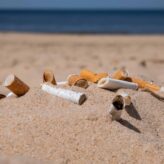
Trillions of cigarette butts end up in the environment every year. They contain over 7,000 chemicals – especially heavy metals and nicotine. Even light rain washes these toxins out of the cigarette butts and the toxic cocktail enters the groundwater via the sewage system. A single cigarette butt can contaminate up to 1,000 litres of […] Read on...
Smart Fact # 7
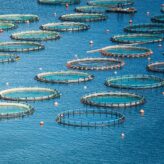
Since 2022, more fish have been bred in aquaculture than caught in the wild. Is this progress? – Unfortunately not. Fish farming contributes to water pollution and the excessive use of antibiotics. Predatory fish such as salmon are also fed fishmeal and fish oil from wild fish, which further exacerbates overfishing.
Smart Tip # 1
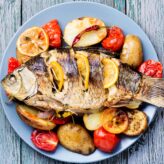
Fancy some fish? – Choose peaceful fish (unlike predatory fish, they are the vegetarians of the fish world) from organic farms in your area. In Europe, it is better to choose local carp than tilapia, for example, which is an omnivore from Africa and Asia – if only because of the shorter transport distances.

Smart Fact # 1
Microplastics are everywhere today. They are in the air, in water, in soil, in food – and also in our bodies: in our blood, brain, heart and placenta. Every week, we ingest around 5 g of plastic (roughly equivalent to a credit card). This can be harmful to our health, particularly by triggering inflammation.
The Oceans – A World of Wonders
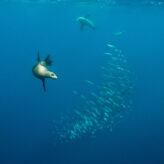
Life in the oceans presents itself to us in immense diversity and breathtaking beauty. This vast, life-giving, self-sustaining and self-renewing habitat has always drawn us human beings into its powerful spell and fills us with wonder. With admiration, we recognise that we are part of something far greater that forms the basis of our existence. […] Read on...
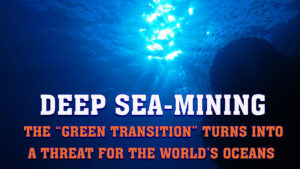
Deep-Sea Mining – The “Green Transition” Turns into a Threat for the World’s Oceans
Seas and oceans define this planet Earth in a unique way. They make it a blue planet and establish a connection between all the continents. The sea gives life. It is the biggest converter of carbon dioxide and is crucial for the entire water cycle, it is habitat for uncountable numbers of animal […] Read on...
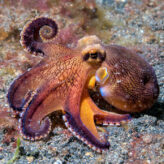
World Ocean Day: We are responsible for our fellow creatures in the oceans!
The oceans are the cradle of life and the most biodiverse habitat on our planet. Around 23,000 species are known, but scientists estimate that as many as 10 million species could live in the oceans! (In comparison, around 1.4 million species live on land.) Although the Earth is a “water planet”, the depths of the […] Read on...
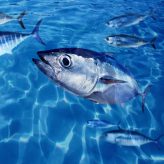
World Ocean Day: The suffering of fish
For more than 3 billion people, fish is the primary and often irreplaceable source of protein; 800 million people live directly or indirectly from fishing. To feed that many people, it takes a lot of fish: worldwide, more than 90 million metric tons are caught each year, covering nearly seven percent of global protein consumption. However, […] Read on...