Marine protected areas have been proven to be an effective way of protecting our planet’s largest habitat – our oceans – and enabling their regeneration. In these areas, fishing is restricted or, in so-called no-take zones, even completely prohibited.
As it has meanwhile become clear how significantly the establishment of marine protected areas can contribute to the recovery of the oceans, efforts are being made from various sides to rapidly advance this development. According to the Convention on Biological Diversity (CBD), at least 30% of the global ocean area is to be protected by 2030. Today, only around 9.4% is under protection, of which just 3.2% is strongly or fully protected.
In January 2026, after decades of negotiations, the United Nations Agreement on the Conservation of Marine Biodiversity Beyond National Jurisdiction (BBNJ) also came into force. It is regarded as a crucial instrument for implementing the aforementioned conservation efforts by 2030, as marine protected areas can now also be established and administered in international waters.
The following example impressively illustrates the protective and regenerative effects of marine protected areas.
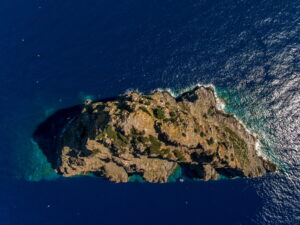 The volcanic island of Jabuka lies in the Croatian Adriatic, surrounded by some of the most fish-rich waters in the Adriatic Sea. However, overfishing has severely depleted stocks, prompting the government to decide in 2017 to establish a marine protected area as a protective measure in this region which was implemented in 2018. Since then, all forms of fishing have been completely banned in the Jabuka Basin.
The area is one of the few fully protected marine areas in Croatia; less than 1% of Croatia’s coastal waters enjoy this strict protection status. The aim of the measures is to preserve the sensitive marine ecosystems in the Jabuka Basin at depths of up to 400 metres and to rebuild the stocks of endangered species such as European hake and Norway lobster in the long term.
The conservation zone was initially rejected by local small-scale fishermen, but soon proved to be a stroke of luck for them. The reason for this is the so-called ‘spillover effect’, which results from the fact that fish stocks within the no-take zone are able to grow and reproduce undisturbed and subsequently migrate to adjacent areas where fishing is permitted. Ultimately, this benefits the local fishing industry, as it means there are larger stocks even in areas where fishing is permitted.
The results of the spill-over effect in the Jabuka-Basin are impressive:
- Fish sizes and catch volumes outside the protected area have increased.
- The biomass of hake has increased fivefold, and that of Norway lobster has doubled – both species are migrating increasingly into adjacent areas.
- Furthermore, the deep Jabuka Basin contains several water layers with different flow patterns. The resulting currents cause larvae and juvenile fish to be transported into neighbouring waters where fishing is permitted. This is a key mechanism of the spillover effect.
The fishing ban is strictly enforced. Violations can result in heavy fines and even imprisonment!

The example of the Jabuka Basin in Croatia shows very clearly what can be observed in all strictly protected marine conservation areas: in nature, everything is connected, creating a constant ripple effect that makes life possible in the first place. The complex life forms and communities on our planet are all based on this principle of connectedness and dependency: life sustains life. Boundaries, on the other hand, are man-made. Let us therefore take inspiration from nature’s example and harness this ripple effect by consciously setting good causes in motion, which will spread in unpredictable ways and in turn trigger new positive effects!