
“To exist as a nation, to prosper as a state, and to live as a people, we must have trees”. This statement is generally attributed to Theodore “Teddy” Roosevelt (1858–1919), the 26th President of the United States of America. Roosevelt is regarded as one of the key founders of modern conservation policy, who sought to utilise nature yet not exploit it. That he was serious about this is evidenced by the fact that, during Roosevelt’s presidency, around 230 million acres of land were placed under protection, creating five national parks, 18 national monuments (e.g. Mount Olympus National Monument, which is now also a national park) as well as 150 national forests (e.g. Sequoia National Forest).
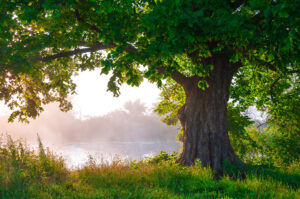
There is no doubt that everyone realises how indespensible trees are to our survival, when we think of oxygen production as well as CO2-absorption and -storage. Deciduous forests produce a full fifteen tonnes of oxygen per hectare every year, whilst coniferous forests even reach thirty tonnes. Their role in regulating the climate and the water cycle is now widely recognised by many people. And who isn’t grateful, on a hot summer’s day, for the coolness and shade provided by the tree canopy?
Delving deeper into this topic, it quickly becomes clear that human beings would scarcely be able to survive without trees. The list of foods we owe to trees is virtually endless, ranging from avocados to figs and mirabelle plums, right through to damsons and lemons. We also have to thank trees for our oils, sweeteners (such as maple syrup or coconut blossom sugar), flours (for example, from sweet chestnuts) and alternatives to cow’s milk (almonds, coconut). And many of us would surely miss our hot chocolate or morning coffee!

Trees provide wood for furniture and houses, as well as for stairs, floors, railway sleepers, avalanche barriers, bridges, and everyday items such as brushes, brooms, and garden tools. Forests purify water and air, slow down strong winds, and prevent soil erosion. Wood supplies us with energy in the form of firewood, wood chips or charcoal, and books (and thus knowledge too!) would never have spread so quickly had it not been for a clever mind who, after the invention of the printing press, also invented industrial paper production! And aren’t we grateful that we can also rely on products such as toilet paper, handkerchiefs and tissues in the bathroom?
 Speaking of paper: let us not underestimate the importance of trees for the cultural development of humanity. Had Goethe and Shakespeare still had to write on wax tablets, who knows whether their works would ever have been completed… Neither Chopin’s nor Rachmaninoff’s piano concertos would ever have touched our hearts, and the same applies to many other musical works of art, for stringed, plucked and wind instruments also unfold their magic through the material of wood. What about paintings, carvings, woodturning, sculptures or even toys? And even though we see them more and more often, plastic Christmas trees cannot compete with the original in terms of beauty, scent or dignity.
Last but not least, let’s not forget the significance of trees for our health. Whether from resin, blossoms, leaves, bark or roots, countless effective ingredients for medicinal teas, oils, medication or even Bach flower remedies come from trees. Simply by walking in the woods or sitting under a tree in the garden, the terpenes from conifers strengthen our immune system and our green friends soothe our irritated senses.
More than enough reasons, then, to say a heartfelt “thank you” to the trees on this year’s Arbor Day (April 24th)!